
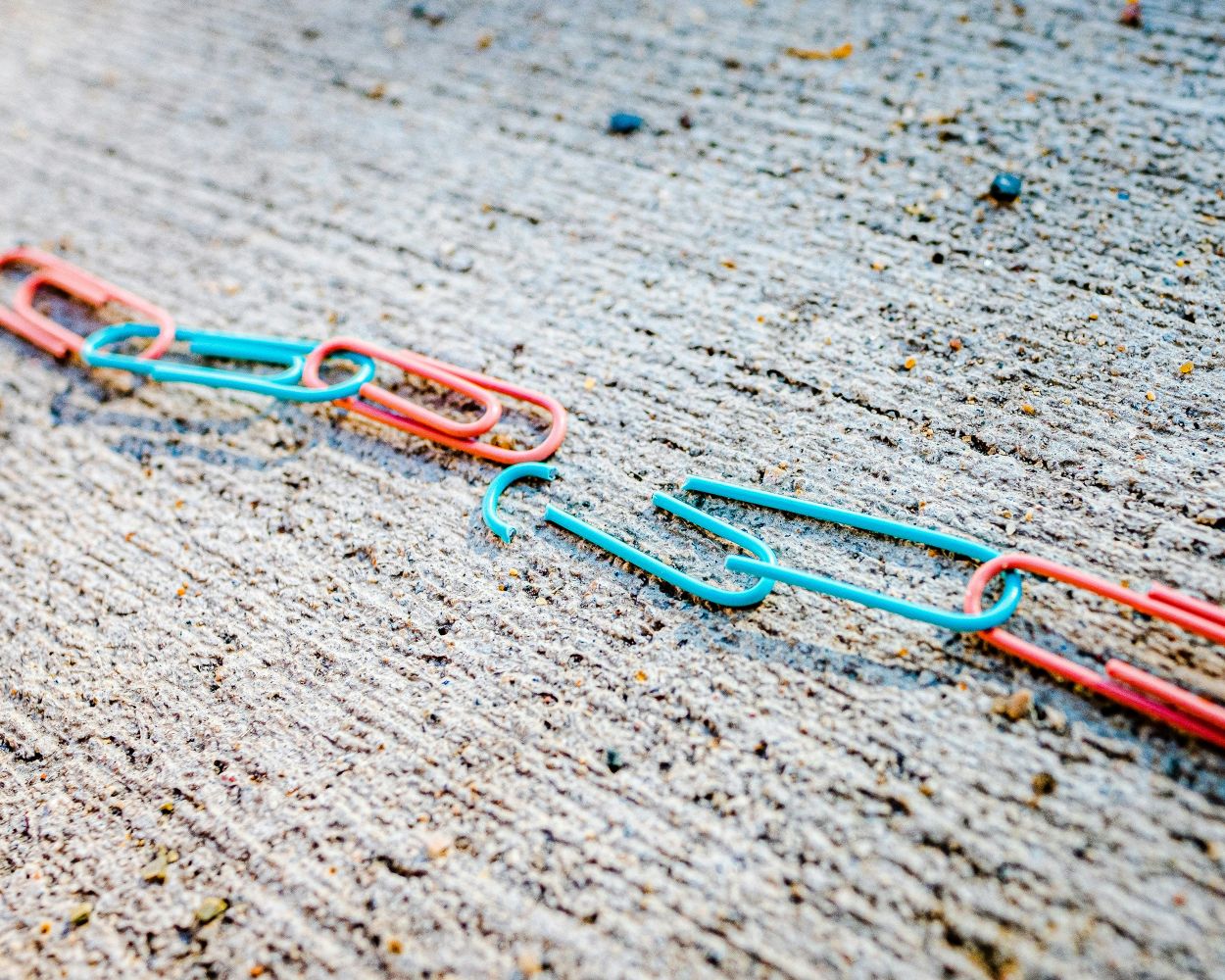
Not completely broken, or is it?
The print and signage industry is very good at sticking with what works. And, for decades, PVC laminates have worked.
They are familiar. They are widely available. Printers know how to use them. Laminators are designed around them. Customers understand them.
So it is easy to fall back on the old expression: “If it ain’t broke, don’t fix it.“
But perhaps we have been asking the wrong question.
What if the traditional laminate model is actually broken?
Not because PVC laminates don’t perform their basic function. They do.
The problem is everything else we have come to accept as normal.
A film made from PVC. Plasticisers and associated chemistry. A release liner that exists only until the laminate is applied. Extra weight being manufactured, transported, stored and handled — only to become waste minutes after use.
Shrinkage and dimensional movement are accepted characteristics of some conventional materials.
Thousands of kilometres of release liner are discarded because that is simply how laminates have always been made.
And the industry keeps doing it because the system works.
That doesn’t necessarily mean the system makes sense.
NEXA Edge Solo was developed by starting with a different question:
If we were designing a laminate today, would we design it the same way?
Probably not.
The Release Liner Is a Good Place to Start
Consider what happens every time a conventional self-adhesive laminate is used.
The manufacturer produces the laminate.
It also produces a release liner.
Both are wound onto a roll.
Both are packed.
Both are transported.
Both occupy warehouse space.
Both are shipped to the printer.
Then the laminate is applied and the release liner is removed.
Its job is finished.
The customer paid to manufacture it, ship it, store it and handle it — and now has to deal with it as waste.
We have normalised this because release liners have traditionally been necessary.
But once there is an alternative, it becomes reasonable to ask:
Why are we transporting something around the world just so we can throw it away?
NEXA Edge Solo doesn’t have a release liner.
It is self-wound.
That means no liner to remove, no liner to manage and no liner to dispose of.
It doesn’t make the waste stream slightly better.
It removes that waste stream entirely.
220 Metres. Approximately 12kg.
Removing the liner changes more than waste.
It changes the physical efficiency of the product.
A 220-metre roll of NEXA Edge Solo weighs approximately 12kg.
Think about what that means across a warehouse, a delivery network or an international supply chain.
More usable laminate can be carried for less total weight.
There is less unnecessary material to transport.
There is less material for production staff to handle.
And practically everything being shipped has a useful purpose when it reaches the customer.
That seems obvious. Yet it is very different from the way the industry has traditionally operated.
Do We Still Need PVC?
PVC has been enormously successful in the graphics industry.
But success in the past isn’t necessarily a justification for continuing to use a material indefinitely.
Solo is produced from a next-generation polymer formulation and is formulated without PVC, plasticisers, phthalates or PFAS.
That matters, but replacing PVC isn’t enough by itself.
One of the reasons incumbent materials remain dominant is that businesses quite reasonably refuse to sacrifice performance simply to make a better environmental claim.
We agree with them.
At Veritas Print Media, our view is simple:
A more responsible material needs to perform as well as — or better than — the material it is asking customers to replace.
Otherwise, it isn’t really progress.
Some “Normal” Problems Shouldn’t Be Normal
The industry has also learned to live with characteristics such as shrinkage, curling and dimensional movement.
We understand them.
We design around them.
We choose combinations of films and laminates to minimise them.
But perhaps we should stop treating these things as inevitable.
NEXA Edge Solo is dimensionally stable, helping reduce the shrinkage and curling associated with some traditional flexible PVC constructions.
Again, the question isn’t whether conventional laminates can work.
Of course they can.
The question is whether we should continue accepting limitations simply because we have become accustomed to them.
An Unexpected Benefit: Anti-Graffiti Performance
The technology that allows Solo to operate without a release liner creates another interesting advantage.
For a pressure-sensitive laminate to be self-wound, its surface needs very particular characteristics so that the adhesive does not permanently bond to the film beneath it while on the roll.
Those surface characteristics also create exceptional resistance to many inks, paints and contaminants.
The result is inherent anti-graffiti performance.
So an innovation originally developed to eliminate one unnecessary material can also deliver an additional performance benefit.
That is what material innovation should look like.
Not sustainability instead of performance.
Sustainability through better performance and smarter design.
Change Without Changing Everything
Of course, innovation becomes much harder to adopt if it requires businesses to replace machinery or completely redesign their production processes.
Solo doesn’t.
It runs through a conventional roll laminator.
There is no specialist laminating equipment required.
For operators accustomed to conventional pressure-sensitive laminates, the workflow remains familiar — except there is no release liner to peel away and manage.
This is important.
The objective shouldn’t be to make printers completely change the way they work.
It should be to remove the things they never really needed in the first place.
And Then There Is Price
This is where the argument becomes particularly interesting.
Normally, when the industry hears words such as next-generation material or more sustainable, it expects the next sentence to be:
“But it costs more.”
NEXA Edge Solo is priced below many conventional PVC laminates.
That means the case for changing doesn’t have to rely on sustainability alone.
Solo offers:
- no PVC;
- no release liner;
- significantly less waste;
- very low roll weight;
- dimensional stability;
- inherent anti-graffiti characteristics;
- conventional laminator compatibility; and
- a price designed to compete with — and potentially beat — traditional PVC laminate.
That is a very different proposition from asking customers to pay a premium to make a greener choice.
Perhaps “It Works” Is No Longer Good Enough
For a long time, the argument against changing materials has effectively been:
“What we have works.”
And technically, that is true.
But we are entering a period where simply working may no longer be a high enough standard.
If a product requires us to manufacture and transport a component whose ultimate purpose is to become waste, perhaps there is something wrong with the design.
If we can remove PVC and problematic chemistry without sacrificing performance, perhaps we should.
If we can carry more usable material with less transport weight, perhaps we should.
If we can reduce waste and reduce cost, the old reasons for resisting change become increasingly difficult to defend.
The traditional laminate isn’t broken because it doesn’t laminate.
It is broken because we now know there is a smarter way to do it.
And once a better solution exists, continuing to do something simply because “that’s how we’ve always done it” stops being a particularly convincing argument.
Time to Put It to the Test
At Veritas Print Media, we don’t expect customers to change materials because of a marketing claim.
We want them to test them.
Run Solo through your laminator.
Compare the finish.
Handle the roll.
Test its dimensional stability.
Try cleaning contaminants from the surface.
Look at how much waste is left at the end of the job.
Then compare what you have just used with the PVC laminate you normally buy.
Because perhaps the question is no longer:
“Why should I change?”
Perhaps it is:
“If this works better, creates less waste and costs less, why wouldn’t I?”
NEXA Edge Solo. A rethink of what a laminate actually needs to be.