
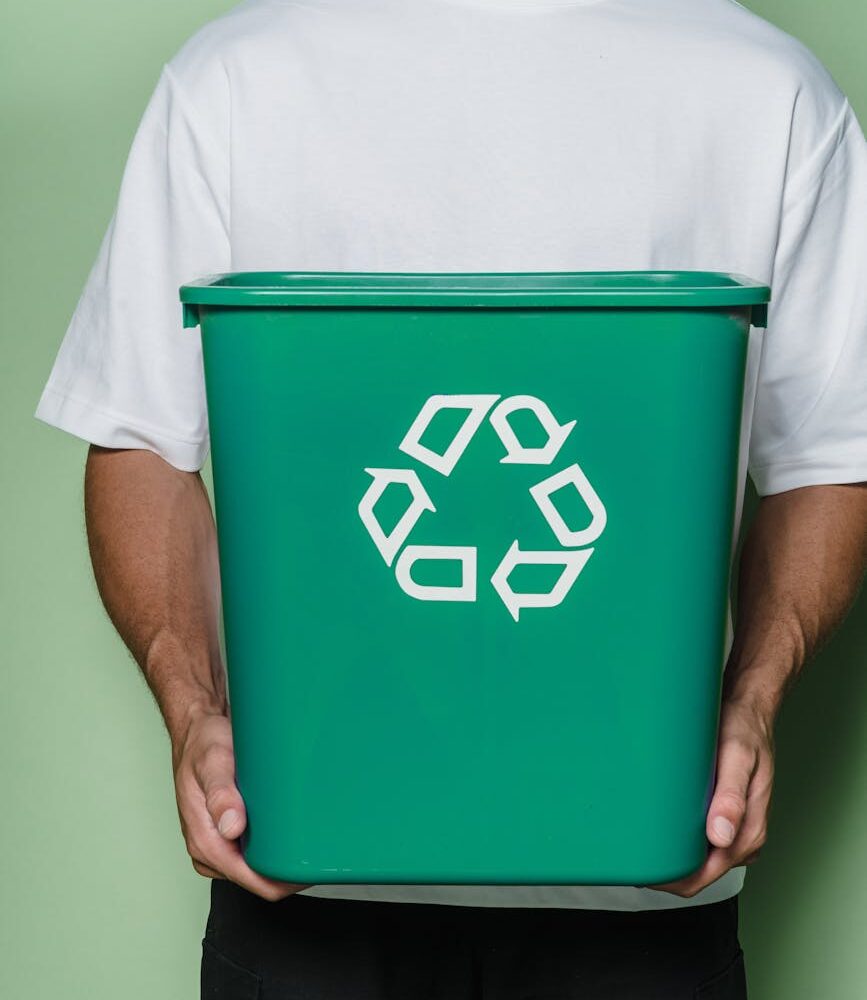
Recycling is not all of it
Wowsa. Where to begin?
We have been taught over the years to ask for recyclable. That’s because it is better than not. But is it? Really?
Let’s check out what the Oxford English Dictionary says to start with:
- Recyclable (adj. & n) – able to be recycled
- Recycling (v) – transitive. To reuse (material) in an industrial process; to return (material) to a previous stage of a cyclic process
- Upcycling (v) – transitive. To reuse (waste material) to create another product
- Biodegradable (adj.) – Of a substance or object (esp. refuse or a potential pollutant); able to be broken down and decomposed by the action of a living organism (esp. bacteria), or their metabolic or biochemical processes
- Carbon Capture (v) – the process of trapping carbon dioxide produced by burning fossil fuels or other chemical or biological processes and storing it in such a way that it is unable to affect the atmosphere, with the aim of mitigating the effects of global warming.
So, which is least bad?
Notice how it isn’t a case of which is best? That is because even the least bad of these options, there is room to improve. But in each instance, it IS about reducing our impact on the environment.
But for too long we have been fed the line that “recyclable” is fabulous. It isn’t. Well, it isn’t if there is nobody who can recycle it. It is only less bad if someone can return it and process it into another version of itself or upcycle it into something else which is useful. Taking waste and making it into something else we can use.
It is a pet hate of ours here at Veritas. It is a throw-away line which, at a glance, sounds good. In reality it is often meaningless and designed to fool you into believing you are doing the right thing.
ask questions
Ask the hard questions:
- How is it recycled? What is the process?
- Where is it recycled?
- What is the end product used for?
- What chemicals and energy are required to recycle it?
- Can I visit so I can see it for myself?
You’ll be amazed at how quickly the topic gets changed to something else.
None of these questions should be avoided or talked around in circles. Why? Because the LAST thing you want is 60 Minutes doing an expose on a “recycling” facility which isn’t…and you finding out that is where your waste goes. Will you be named? Or will they simply find printed materials of your largest, most enduring client and splash that all over the screen? Yes, and yes. Shock and awe. That’s how it works. If your client is a well-known brand, you can guarantee it will happen. And it will be YOUR fault. Because you were the one that signed up to that program.
But if it recycled (hint: very few things can be recycled) then *phew*, but how much energy is used to do that? What chemicals are used in the process, if any? Are these inert or are they of the exceptionally nasty, we’re all gonna die variety?
Most likely, if it is happening, it is being Upcycled into something else entirely. What is it being upcycled into? How much of a market is there for said product? What happens then to it? Can it be upcycled again?
See, there is much more to it than simply “it is recyclable”. I call BS. I call greenwashing.
Biodegradable isn’t greenwashing
So, Biodegradable? Carbon Capture? They sound ok. But my client keeps asking if it is “recyclable” because they have a checklist or something like that. Yeah, here’s where we are fighting the fight. And it is a fight that is worth having.
Biodegradable and carbon capture are both MUCH less bad than the alternatives.
There is much less energy involved in getting it to do what it does. There is no specific training required. There is no special bin and return to base requirements. Send it to landfill and your work is done.
carbon capture
Trapping atmospheric carbon (carbon dioxide) is the name of the game. We humans have been burning fossil fuels and releasing sh!te loads of CO2 into the atmosphere. That has and is doing untold damage to our world. We desperately need to reverse this. Desperately.
The more plants we can grow, the better. The plants use CO2 as part of their photosynthesis, trap the carbon and release the O2 back into the atmosphere. That is a good thing. A VERY good thing.
Harvesting that fast growing, no/low pesticide, no/low herbicide, no/low fertilizer, no/low water irrigation plant and putting it into the ground is working on reversing the damage we have been doing by burning fossil fuels.
That is where we need to be. There is no greenwashing. Even if it isn’t as efficient as it can be, it is still MUCH less bad than the alternates.
So the next time someone tells you it is “recyclable”, call BS unless they can actually prove it. I’ll bet they will struggle. Ask us about BIOND and we will give you all the data about how it is made, where it is made, the amount of carbon it is capturing, etc. Nothing to hide. Only an open and honest conversation about doing less bad than we have been doing to date.